Showing posts with label NEWS. Show all posts

Thursday, 11 October 2012

A NOTE TO INFORM YOU


TERESA GUEVARA-PÉREZ


Dear participants, this note is to inform you that our Special Session in the 15WCEE on "THE ROLE OF ARCHITECTURE AND URBAN PLANNING IN THE EARTHQUAKE-RESILIENCE OF CITIES" that was held on Thursday, Sept. 27 in Lisbon, was a success. 


At least 74 people that participated on it, signed the attendance list and some other that attended this SS informed us afterwards that they are also interested  in order to receive information and participate on this regard. This means more than 80 people participating from the Lisbon SS.


The International Network for Design of Earthquake-Resilient Cities (INDERC), in Spanish, la Red Internacional para el Diseño de Ciudades Sísmicamente Resilientes (RIDCSR), was founded.

Next week we will give more detailed information.

Thank you very much to all those people who attended our 15WCEESS and also to all those who have visited this blog.

Until next week.

ANDREW CHARLESON, PATRICK MURPHY, MÁRIO LOPES AND FRIEDRICK KRIMGOLD

Saturday, 28 July 2012

THE ECONOMIC AND SOCIAL COST OF SEISMIC DISASTERS IN ITALY OVER THE PAST 150 YEARS, A BOOK BY EMANUELA GUIDOBONI AND GIANLUCA VALENSISE

DAMAGES IN THE RICH HERITAGE OF THE MOST CULTURAL TOURISTIC COUNTRY IN THE WORLD

An amazing book by Emanuela Guidoboni e Gianluca Valensise:

Il peso economico e sociale dei disastri sismici in Italia negli ultimi 150 anni


With the hardness of a database and the subtlety of a historical study, are recounted the 34 seismic disasters that have marked the history of Italy in its first 150 years, from unification. A seismic disaster occurs on average every 4-5 years, with severe damage or destruction at 1,560 locations, 10 cities, including capitals. And in between, other 86 earthquakes of lower energy, but sometimes a little less destructive.


LA ROCCA (FINALE EMILIA, 2012)


An Italian story unusual and disconcerting, on which no one had yet submitted the bills. Unpredictable, destructive, expensive, seismic disasters continue to weigh on the economies and afflicted societies for decades, sometimes forever.

At any time has been, strong earthquakes have changed the lives of individuals  and families, changed social relations, rich heritages places demolished, damaged or reduced historic and modern buildings to rubble, modified forms of urban settlement networks changed, scoring sometimes ruins and leave the Italian landscape. Why so much damage? Who paid the higher cost?


The words by Emanuela Guidoboni:

"... The aim was to understand the seismic problem in our country This publication was made possible by the historical research developed for the Catalogue of Strong earthquakes in Italy from 462 BC up to 2010 (database now INGV). We have a disaster every 4-5 years, even with relatively low magnitude (5.5 to 5.8). We have tried to shed light on the causes: the character of the buildings (65% is before 1950), an extended presence of old and poor houses, lack of earthquake standards. But even when there were laws, weak institutional and political instability have underestimated the importance of applying seismic safety, though again and again emanating. Another important element, especially in the last 50 years, is the lack of information on seismic risk in the population..."


The book is organized by the Euro-Mediterranean documentation EXTREME EVENTS AND DISASTERS, in collaboration with the National Institute of Geophysics and Volcanology.

THE COVER


The book show 258 pictures and 43 maps of the seismic effects strictly based on scientific data that are especially processed for this rigorous and brilliant work


DIANO MARINA LIGURIA, 1887
L'AQUILA, 2009


LIVE EARTHQUAKE IN EMILIA ROMAGNA (SKY TG24)

Tuesday, 26 June 2012

TOHOKU, RESILIENCE THROUGH THE ART OF LIVING

Ein Schöner Tag by Schiller on Grooveshark
MUSIC BY SCHILLER, EIN SCHÖNER TAG (WELTREISE)


Beginning April 27, 21_21 DESIGN SIGHT will present a new exhibition "TEMA HIMA: the Art of Living in Tohoku". It is a follow-up to last July's "THE SPIRIT OF TOHOKU: 'CLOTHING' BY ISSEY MIYAKE" held in the wake of the Great East Japan Earthquake


POSTER


This exhibition will focus on the "food and living spaces" of the Tohoku region as seen through the eyes of graphic designer Taku Satoh and product designer Naoto Fukasawa, two of the three directors of 21_21 DESIGN SIGHT (Issey Miyake is the third).


DESIGN: TAKU SATOH
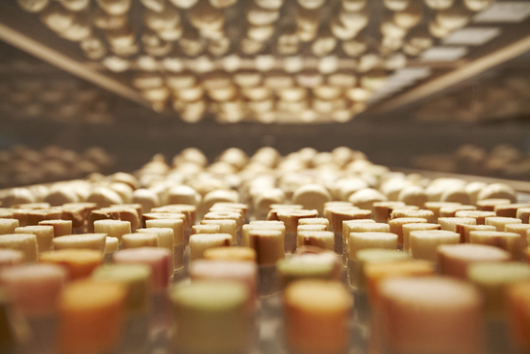
The Tohoku region in Northern Japan is renowned for its severe winters and uncharacteristically cool summers that make the lifestyle in the area very different from other parts of Japan. The exhibition presents works that speak from the heart. It offers artistic expressions of Tohoku's vitality, its people's admirable resilience and their ability to overcome numerous struggles. The collection of approximately 100 objects, photographs and videos on display prompts an immediate and compelling desire to find truth, reconnect to the cycles of Nature, let time unveil the essence of things and make things with your hands.

SOLITUDE
A team of designers plus a food director, a journalist, a photographer and a film artist travelled around the six prefectures of Tohoku for three months. They visited environments and places where the degree of pretence is minimal and where people's stories may be raw and very old but they retain a special freshness and fragrance. The result of their research is a story told by objects, especially foods and utensils, and pictures of what they saw in Tohoku. 

ART FROM THE HEART
Tema Hima gives the impression that the curators penetrated the coarse and pulsating essence of things. They went back to the foundations of how these populations live. The group portrait that emerges is one of substance: farmers describing their traditions, craftspeople putting their own lives into their creations, and encounters with young local talents anxious to explore new production options. These intrinsically beautiful objects are not the product of individual genius, but of the collective force of tradition, an impersonal beauty that belongs to all.

WORK WITH YOUR HANDS
These heartfelt expressions of everyday life are also a celebration of the Tohoku people. We human beings have built up a highly civilized society but in doing so we have had a great influence on the Earth's environment. The highly developed technologies change the circumstances not only in Nature and in comunication, but also in a moral dimensión.


21_21 DESIGN SIGHT : Issey Miyake, Taku Satoh , Naoto Fukasawa. Musseum: Tadao Ando.


21_21 DESIGN SIGHT, SEISMIC-RESISTANT AND RESILIENT ART

Interest and curiosity for Nature and the human being is a primitive step toward Natural Science. Recently, people are apt to be indifferent to Nature. We must understand the Earth´s past in order to look towards its future. Despite the great technological advances of civilization, we should look towards the natural.

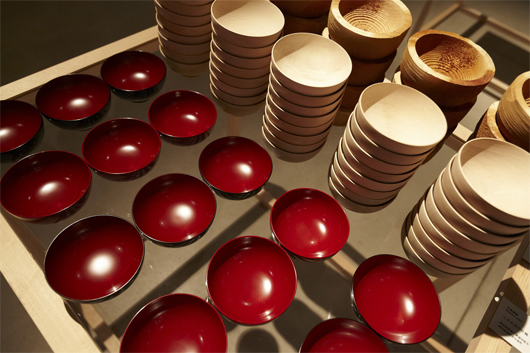
THE BOWLS WITH NO FOOD


WITH OUR HANDS
The attitude we take towards Nature will invite us (or not) to face that part of the global responsibility which each person bears due to his participation, to whatever degree, in the social and economic life of our species. This participation, though scientific proof is still lacking, should bear an awareness of the consequences of atmospheric pollution caused by the chemical, radioactive, plastic, and oil industries that are released into the air. And this awareness must be promoted.

Governments are strongly urged to enforce corrective measures against the main culprits such as energy producers, transport systems and urban developers, so as to avert potential catastrophes. In today's world, our consciousness of our relationship to the elements of Nature is often subdued, relegated somewhere to the deep recesses of our awareness. 

The interpretive and constructive character of human cognition is fully acknowledged, but the intimate, interpenetrating and all-permeating relationship of Nature to the human being and human mind allows the Kantian consequence of epistemological alienation to be entirely overcome.

The human spirit does not merely prescribe Nature's phenomenal order; rather, the spirit of Nature brings forth its own order through the human mind when that mind is employing its full complement of faculties, intellectual, volitional, emotional, sensory, imaginative, aesthetic, epiphanic. In such knowledge, the human mind "lives into" the creative activity of Nature.

Then the world speaks its meaning through human consciousness. Life goes on in Tohoku, but some things have been affected for ever. In this exhibition, we consider how the people in the region and Japan as a whole have responded to the events of 11 March 2011. Hand in hand to rebuild Tohoku. Two hands taking shape of a heart.


The Tohoku winter is long, with everything blanketed in snow for months, and survival has always been a challenge for the locals. The objects and the foods in Tema Hima seem to have been produced in collaboration with Nature or out of resistance to it. Perhaps this is why they have the feel of winter, snow and the cold but also of affectionate warmth, fire and survival. They contain the beauty of real things and craftsmanship passed down through the generations.


2. RESILIENCE THROUGH PHOTOGRAPHY

TOHOKU PEOPLE, BEFORE AND AFTER, JUST ONE VIEW FROM A SINGLE PHOTOGRAPHY

We've all seen Japanese people in our touristic countries portrayed as fervent camera enthusiasts. Apparently, this is not new. Are they really nuts about cameras? Japanese and cameras, the perfect couple: is it real or a stereotype? Resilience is much greater when you do what you know how to do it well. The evidence is here:


THE TOHOKU DISASTER PHOTOS


Resilience is the result of individuals being able to interact with their environments and the processes that either promote well-being or protect them against the overwhelming influence of risk factors. These processes can be individual coping strategies, or may be helped along by families, schools, neighbours, communities, and social policies that make resilience more likely to occur. Resilience can be viewed as the recovery from a prolonged or severe adversity, and its best vehicles can be art and culture, in Tohoku  photography is also a therapeutic path as seen.


EYE SEE TOHOKU, RESILIENCE THROUGH PHOTOGRAPHY


Sunday, 1 April 2012

THE 2012 LISBON INDERC MANIFESTO


The 2012 Lisbon INDERC Manifesto
International Network for Design of Earthquake-Resilient Cities (INDERC)
Red Internacional para el Diseño de Ciudades Sísmicamente Resilientes (RIDCSIR)

We, professionals (architects, geologists, urban planners, structural, civil, geotechnical social engineers, etc.) engaged in making cities resilient to earthquakes.


1. Having participated in the Special Session “The role of architecture and urban planning in the earthquake resilience of cities” of the 15th World Conference on Earthquake Engineering.

2. Recognizing that:

· The design of cities has a critical effect on their ability to absorb, respond to and recover from the effects of earthquakes. 

· This goes beyond the structural strength of buildings, the physical resilience of lifelines and critical infrastructure, and geotechnical engineering.

· The earthquake resilience of cities includes the design and layout of cities and their components, the consideration of earthquake hazards in this design, and their relationship to how communities and authorities alike can respond to and recover from earthquakes.

· There is a need of communication professional exchange and cooperation between those professionals who are interested in examining and applying earthquake-resilient design and the consideration of earthquake hazards generally, in the fields of architecture, urban design, urban planning, and landscape architecture.

· It is important that a multidisciplinary approach should be taken to the gathering and implementation of knowledge on this subject. Means to foster communication and collaboration; between the fields of engineering, design and planning, emergency management, and policy and government, will be formed and promoted.

Propose:

The creation of the International Network for Design of Earthquake-Resilient Cities is to:

- Provide a hub for multidisciplinary knowledge exchange about design for earthquake-resilience of cities through an open network of individuals and organisations.

- Encourage communication and collaboration between disciplines related with the seismic resilience of cities: structural engineering, geotechnical engineering, seismology, lifelines engineering, emergency management, social sciences, architecture, urban planning and landscape architecture, and others; and policy-makers and government authorities. 

- Encourage engagement with all disciplines concerned with the aim of earthquake-resilient cities.

- Identify areas for study and development within the fields of architecture, urban design, urban planning, and landscape architecture that consider urban resilience from the effects of earthquakes as a part of best-practice design.

- Promote educational initiatives such as cross-disciplinary courses in schools of architecture, urban planning and structural engineering, including the influence of urban planning and architectural configurations on seismic resilience of cities.

- Assist in the advancement of resilient design principles in city planning policy and building regulations, through the collaboration between engineering and design disciplines and policy makers.

INITIAL MOMENTS OF THE SPECIAL SESSION "THE ROLE OF ARCHITECTURE AND URBAN PLANNING IN EARTHQUAKE-RESILIENCE OF CITIES"  INTO THE 15WCEE. SEPTEMBER 27, 2012 IN LISBON, PORTUGAL